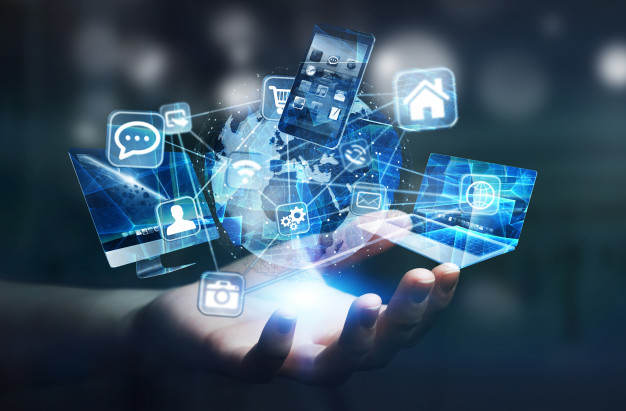
There’s a lot of noise at the moment about the Internet of Things (or IoT) and its impact on everything from the way we start our day to the way we take our first meal and do our shopping to the way manufacturers keep track of inventory and the way we drive our cars to the way we just watch our television, it is going to impact every aspect of our life. But what is the Internet of Things? How does it work? And is it really that important?
Internet of things was coined by Kevin Ashton of Procter & Gamble though he prefers the phrase “Internet Of Things”. At that time he viewed RFID(Radio Frequency Identification) as essential to the internet of things. Radio-frequency identification (RFID) uses electromagnetic fields to automatically identify and track tags attached to objects. An RFID tag consists of a tiny radio transponder; a radio receiver and transmitter.
What is the “Internet Of Things”???
The Internet of Things is the concept of connecting any device (so long as it has an on/off switch) to the Internet and to other connected devices – all of which collect and share data about the way they are used and about the environment around them. Simply the points in time when more things or objects were connected to the internet than people.
Take the example of your home
Imagine you wake up at 7 am every day to go to work. Your alarm clock does the job of waking you just fine. That is until something goes wrong. Your train is canceled and you have to drive to work instead. The only problem is that it takes longer to drive, and you would have needed to get up at 6.45 am to avoid being late. Oh, and it’s pouring with rain, so you’ll need to drive slower than usual. A connected or IoT-enabled alarm clock would reset itself based on all these factors, to ensure you got to work on time. It could recognize that your usual train is canceled, calculate the driving distance and travel time for your alternative route to work, check the weather and factor in slower traveling speed because of heavy rain, and calculate when it needs to wake you up so you’re not late. If it’s super-smart if might even sync with your IoT-enabled coffee maker, to ensure your morning caffeine’s ready to go when you get up.
(Source: IBM)
Features of IoT:-
The IoT is a complex system with a number of characteristics. Its characteristics vary from one domain to another. Some of the general and key characteristics identified during the research study are as follows:
Intelligence:- IoT comes with the combination of algorithms and computation, software and hardware that makes it smart. Ambient intelligence in IoT enhances its capabilities which facilitate the things to respond in an intelligent way to a particular situation and supports them in carrying out specific tasks. IoT only means interaction between devices, while user and device interaction are achieved by standard input methods and graphical user interface.
Dynamic Nature:- The primary activity of IoT is to collect data from its environment, this is achieved with the dynamic changes that take place around the devices. The state of devices changes dynamically, for example sleeping and waking up, connected and/or disconnected as well as the context of devices including temperature, location, and speed.
Enormous Scale:- The number of devices that need to be managed and that communicate with each other will be much larger than the devices connected to the current Internet.
Sensing:- IoT wouldn’t be possible without sensors that will detect or measure any changes in the environment to generate data that can report on their status or even interact with the environment. Sensing technologies provide the means to create capabilities that reflect a true awareness of the physical world and the people in it.
Heterogeneity:- Heterogeneity in the Internet of Things as one of the key characteristics. Devices in IoT are based on different hardware platforms and networks and can interact with other devices or service platforms through different networks. IoT architecture should support direct network connectivity between heterogeneous networks. The key design requirements for heterogeneous things and their environments in IoT are scalabilities, modularity, extensibility, and interoperability.
Security:- IoT devices are naturally vulnerable to security threats. It is important to secure the endpoints the networks, and the data is transferred across all of it means creating a security paradigm.
A solution to “basket of remotes”:- Many IoT devices have the potential to take a piece of this market. For improved user interaction, some technology leaders are joining forces to create standards for communication between devices to solve this problem.
Complexity:- In semi-open or closed loops ( i.e. value chains, whenever a global finality can be settled) the IoT will often be considered and studied a complex system due to a huge number of different links, interactions between autonomous actors, and it’s capacity to integrate new actors.
Application of IoT:-
Smart Home:- IoT devices are a part of the larger concept of home automation, which includes lighting, heating, and air conditioning, media, and security system.
Medical and Healthcare:- The IOMT(Internet of Medical Things) is also called the Internet of health things is an application of the IoT for medical and health-related purposes, data collection and analysis for research, and monitoring…IoMT has been referenced as “Smart Healthcare”, as the technology for creating a digitized healthcare system, connecting available medical resources and healthcare services.
Transportation:- IoT can assist in ITS(Intelligence Transportation System), ITS is an advanced application which aims to provide innovative services relating to different modes of transport and traffic management and enable users to be better informed and make safer, more coordinated and “Smarter” use of transport networks…
Industrial applications:- Industrial application also known as IIoT means Industrial Internet of Things devices acquire and analyze data from connected equipment, operational technology, locations, and people.IIoT helps regulate and monitor industrial systems.
Agricultural:- There are numerous IoT applications in farming such as collecting data on temperature, rainfall, humidity, wind speed, pest infestation, and soil content. This data can be used to automate farming techniques, make informed decisions to improve quality and quantity, minimize risk and waste, and reduce the effort required to manage crops. For example, farmers can now monitor soil temperature and moisture from afar and even apply IoT-acquired data to precision fertilization programs.
Greenhouse:- A farming facility, connected greenhouse incorporates the internet of things microcontrollers, sensors, and applications. The technology helps to automate and improve the management of the greenhouse. Moreover, sensors can detect radiation, pathogens, and air quality to identify dangerous concentrations early and allow people to evacuate.
Military application:- The internet of military things(IOMT) is the application of IoT technologies in the military domain for the purpose of surveillance and other combat-related objectives. It involves the use of sensors, munitions, vehicles, robots, human-wearable biometrics, and other smart technology that is relevant on the battlefield.
The Internet of Battlefield is a project initiated and executed by the U.S. Army research laboratory(ARL) that focuses on the basic science related to IoT that enhances the capabilities of Army soldiers….
IoT Adoption Barriers.:-
- Conservative technology culture or too much focus on operational technology.
- Lack of industrial technologist to lead the IoT program.
- Misunderstanding the ROI.
- Security concerns.
- The high cost of implementation.
- Interoperability Concerns.
- Inadequate infrastructure.
Conclusion :-
The internet of things(IoT) examines the interconnection of devices within the existing internet infrastructure. IoT is expected to offer advanced connectivity of devices, system, and services that goes beyond machine-to-machine communications (M2M) and looks at a variety of protocols, domains, and applications. Internet of Things offers some pretty interesting applications in making our lives easier like in Healthcare, Transportation, and Agriculture. However, various factors like security, privacy and data storage also need to be considered.
 Tech Monks